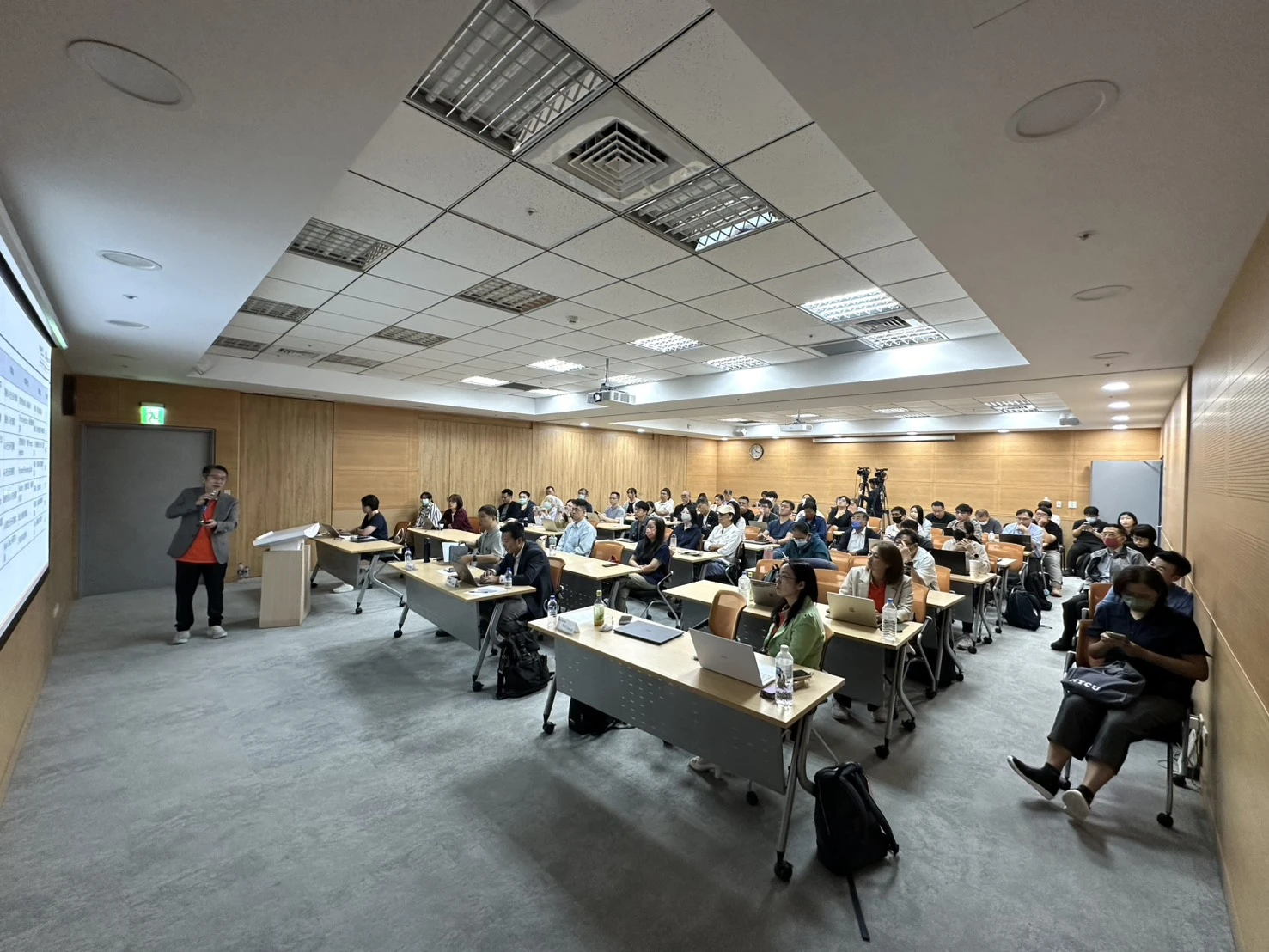
The “Medical AI Cybersecurity in Practice: From FDA Submissions and SBOM Vulnerability Management to Threat Modeling” seminar — organised by the Taiwan Food and Drug Administration (TFDA), Ministry of Health and Welfare, and run by the Institute for Biotechnology and Medicine Industry (IBMI) — was held on 22 October 2026 at the Taipei Biotechnology Park. Our thanks go to the regulator for its continued work on regulatory guidance for smart medical devices, and for building a platform for industry exchange.

Medical AI is usually connected to the HIS, PACS, electronic medical records and knowledge bases, so the attack surface extends across the whole data chain. Common risks fall into four categories:
Research shows that adding a single line of text to an endoscopy image, or forging a medication guideline, can be enough to mislead an AI’s interpretation — or even push up a prescribed dose.
Malicious instructions can hide in medical records, emails or file metadata, and writing restrictions into the system prompt alone is often not enough. Defences should be designed in at the architecture level:
STRIDE suits traditional security analysis, but AI-specific attack techniques are more fine-grained; MITRE ATLAS can be used alongside it to fill the gap.
| Framework | Best suited to analysing |
|---|---|
| STRIDE | System architecture, data flows, communication interfaces |
| MITRE ATLAS | Models, data pipelines, AI-specific attacks |
Take the connection between CT, PACS and an external AI inference service as an example:
In a medical setting, availability is itself part of patient safety.

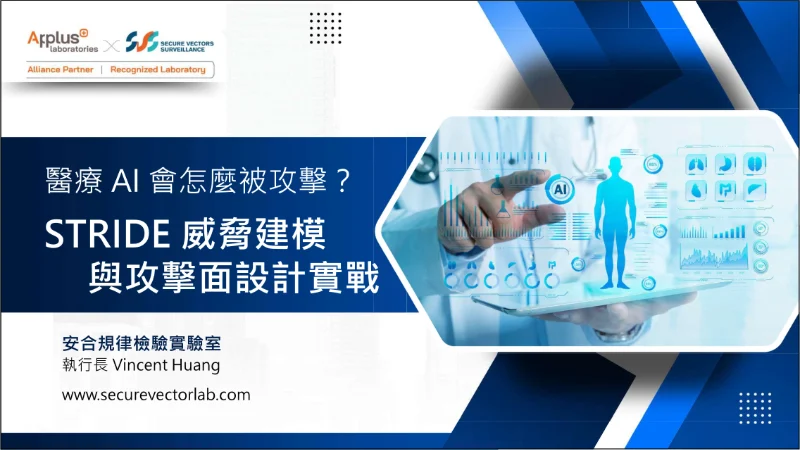 Download the deck →
Q: What is the hardest cybersecurity risk to defend against in medical AI?
Prompt injection. Malicious instructions can hide in medical records or file metadata, and the system prompt alone can hardly prevent them.
Q: Is STRIDE alone enough for threat modeling?
We recommend adding MITRE ATLAS to cover AI-specific attack techniques.
Q: How does threat modeling relate to ISO 14971?
Threat modeling identifies cybersecurity risks; risks that may affect patient safety should be brought into the ISO 14971 assessment, with the mitigations built into the design and the submission documentation.
SVS Lab is an ISO/IEC 17025-accredited laboratory. We provide independent penetration testing, vulnerability assessment and SBOM analysis, and our test reports can serve as technical evidence for manufacturers’ risk management and regulatory submissions.
Enquire about testing services →
Event information: Medical AI Cybersecurity in Practice seminar | IBMI National Innovation Award website (in Chinese)